

Throughout my life, as an athlete, a swimming coach, President of KJA, the manager of Knoxville’s BELFOR office, and especially as a father and husband, I have learned the importance of making decisions based on the common good.
In my work, our team cleans up messes caused by natural disasters like tornadoes, hurricanes, fires, and floods. Our state legislature is a man-made disaster full of mean-spirited legislation, misplaced priorities, and legislators solely focused on extreme social issues.
I’m asking you to send me to Nashville to clean up the mess.
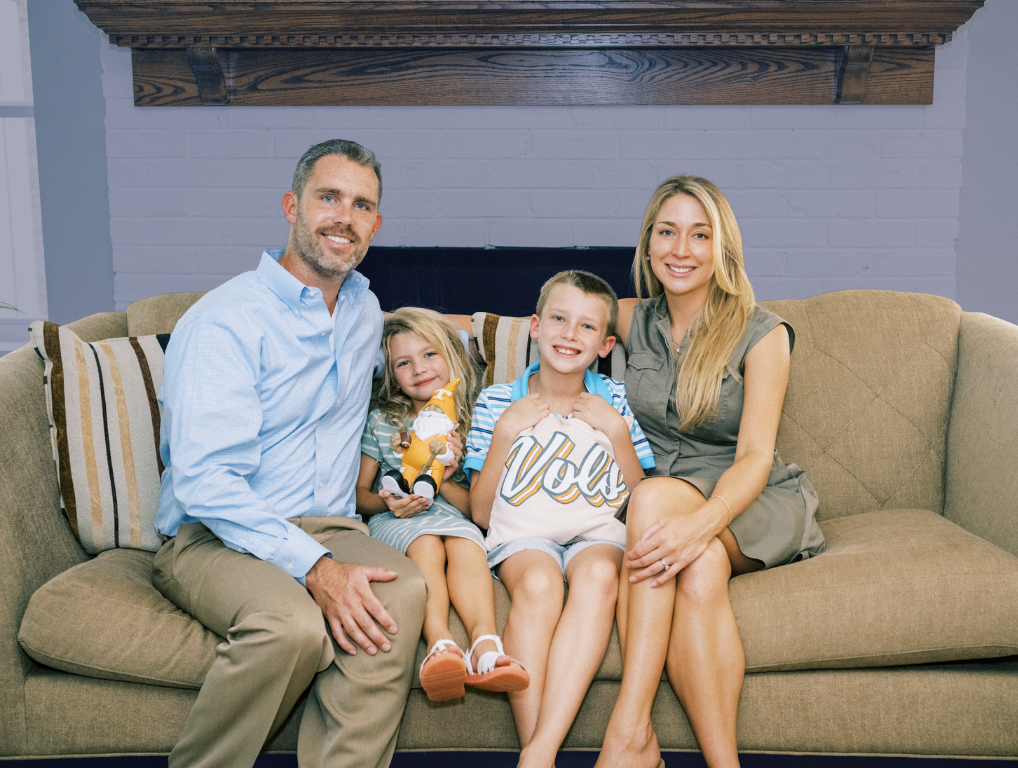
Making decisions for the common good is a principle that I’ve learned in the business world, in athletics, and in the nonprofit community. What’s best for the future of the team, the community, or family is rarely dependent on a divisive issue. Working in Disaster Restoration is about helping people and businesses pick up the pieces - in short, cleaning up disasters. It takes a team willing to work together to accomplish the end goal.
I have proudly called Knoxville home since moving here to attend the University of Tennessee as a student-athlete on a Haslam Business Scholarship. After graduating, I stayed to build my family and career. I started in Disaster Restoration, which I still do today as the manager of Knoxville’s BELFOR office. At BELFOR we go in after disasters, clean up the mess, and restore people’s lives and businesses.
At UT, I fell in love with a beautiful woman from Oak Ridge and a few years later, I somehow convinced her to marry me. In 2015 Adrienne and I welcomed our son Chase and his sister Charlize followed in 2018. They are currently students at Cedar Bluff Elementary School.
In 2017, I joined the board of the Knoxville Jewish Alliance and became the President in 2020. As President, I immersed both myself and the KJA within the greater Knoxville community. I wanted to learn the struggles and opportunities of others to help better lead our Jewish community to be active and engaged within Knoxville.
During my tenure as President, I participated in the Leadership Knoxville Class of 2022, the FBI Citizens Academy Program, and was listed as a 40 under 40 leader by Knox News.
Now, I’ve joined the Dean's Advisory Board for the College of Education, Health, and Human Sciences as well as the East Tennessee Foundation Board and was honored this summer as on of VIP Knoxville’s 50 under 50.
I’m running for State House District 18 because our community deserves someone who listens, understands, and makes decisions that benefit our lives. Our state is going in the wrong direction. We’re being led by folks who’d rather talk about outrage issues than the problems we’re all facing. It’s time for real leaders who understand how to listen and prioritize the common good. My work in Disaster Restoration is all about working alongside folks to pick up the pieces in our community during a disaster. I clean up messes every day. I’m asking you to send me to Nashville to clean up the mess for all of us.

-
You may have heard me say that throughout my life—as a business leader, athlete, coach, President of the Knoxville Jewish Alliance, husband, and father—I’ve learned that leadership isn’t about making everyone happy. It’s about listening, solving problems, and making decisions based on what’s best for the community as a whole.
This is a deeper look at the experiences that have shaped me as a leader and explain why I believe I’m prepared to be your voice in Nashville.
Let’s start with what I do every day.
Sixteen years ago, I opened BELFOR’s Knoxville office, and I’ve had the privilege of leading it ever since. BELFOR is a global disaster restoration company. We help families and businesses recover after fires, floods, tornadoes, storms, and other disasters—often on what has become one of the worst days of their lives. Our job is to clean up the damage, restore homes and businesses, and help people regain a sense of normalcy.
One of the greatest lessons this work has taught me is that disasters don’t care whether you’re a Democrat or a Republican.
When we arrive after a family’s home has burned or a business has been devastated by a storm, no one asks what political party I belong to. They ask one simple question: “Can you help?”
That’s where leadership begins.
The first thing I do is listen. Before we ever swing a hammer or remove a single piece of drywall, I want to understand what’s most important to that family or business owner. What are they most worried about? What can we do to help them get their lives or business back on track as quickly as possible?
Once we understand their priorities, we roll up our sleeves and get to work.
In almost 20 years of disaster recovery, I’ve never solved a problem by arguing with the customer. I’ve solved problems by listening to them.
That’s the same leadership philosophy I’d bring to the Tennessee General Assembly.
After graduating from the University of Tennessee, Adrienne and I knew we wanted to build our careers—and eventually raise our family—right here in Knoxville.
After several years in the disaster restoration industry, BELFOR was looking to expand into Tennessee. Through relationships I had built over the years, I found myself sitting across the table from BELFOR’s CEO and Regional Vice President in a conference room at the Knoxville airport.
By the end of that meeting, we had shaken hands and agreed to build BELFOR Knoxville from the ground up.
I’ll always be grateful that they were willing to place their trust in a 27-year-old with a vision and a strong work ethic. Together, we’ve spent the last sixteen years building an incredible team, serving thousands of families and businesses across East Tennessee, and creating a company our employees and community can be proud of.
Over those sixteen years, I’ve learned that every mess gets cleaned up the same way. You don’t start by pointing fingers. You don’t waste time assigning blame. You assess the situation, listen to the people affected, focus on the biggest problems first, bring the right people together, and get to work.
That’s exactly why our campaign slogan is “Clean up the Mess”.
I believe too many politicians have lost sight of what matters most to working families. While they’re consumed by divisive political theater and ideological fights, families are worrying about whether they can afford groceries, childcare, housing, healthcare, and the rising cost of simply living their lives.
Tennessee doesn’t need more political theater. It needs leaders who know how to solve problems.
That’s what I’ve spent my career doing.
With your support, I’m ready to bring that same practical, results-oriented leadership to Nashville—to listen first, work hard, and help clean up the mess.
-
The experiences that shape us say a lot about how we’ll lead and serve others.
That’s why I want to share these parts of my life —to show you the experiences that have shaped how I lead, how I make decisions, and how I’ll approach the responsibility of representing our community in Nashville.
I want to tell you about swimming and, more importantly, what it taught me.
From the age of 8 to 23, competitive swimming consumed much of my life. Swimming is more than a sport. It is a discipline built around dedication, sacrifice, and perseverance. It means spending months training for the opportunity to shave fractions of a second off a race. It means learning that progress isn’t always immediate or obvious, but that the work still matters.
Those lessons eventually took me from high school swimming to the University of Tennessee on an athletic scholarship and, ultimately, to representing the United States at the 2003 Pan American Games, where I had the incredible honor of winning a gold medal.
Representing our country remains one of the proudest experiences of my life. But looking back, the medal isn’t the most important thing swimming gave me.
It was everything required to get there.
Thousands of hours spent training, refining technique, pushing through exhaustion, overcoming disappointing races, and getting back in the pool the next morning taught lessons that have stayed with me ever since.
At UT, I received the Ray Bussard Spizzerinctum Award—an award recognizing the “will to succeed.”
Spizzerinctum has been one of my favorite words ever since, because it describes something I’ve carried far beyond the pool: the determination to keep working when something is difficult, the resilience to recover when things don’t go your way, and the optimism to believe that progress is still possible.
Those are qualities our politics could use more of.
Resilience means being a strong advocate for West and South Knoxville, even when the political obstacles in Nashville are significant.
Optimism means believing we can protect and strengthen our public schools and build a Tennessee where the next generation has even greater opportunities than we did.
And the will to succeed means refusing to give up on families who are working hard, doing everything right, and still struggling to make ends meet or get ahead.
Swimming taught me that meaningful progress rarely happens overnight. It comes from setting realistic goals, putting in the work every day, learning from setbacks, and refusing to quit simply because the challenge is difficult.
That’s the approach I’ve tried to carry throughout my life—and it’s the approach I’ll bring to the Tennessee General Assembly.
Because representing our community isn’t about promising that every fight will be easy or that every victory will come quickly.
It’s about having the discipline to show up, the resilience to keep fighting, and the will to succeed on behalf of the people you serve.
I’m ready to put those lessons to work for you in Nashville.
-
To tell you what I learned when I moved to the other side of the pool deck, I first have to tell you about my coach.
From the time I was 10 until I finished my competitive swimming career at 23, I was coached by Jack Nelson. Jack became like a grandfather to me—years later, Adrienne and I were even married at his home.
Jack believed in me 100 percent. With him in my corner, I felt like I could conquer the world.
His philosophy was simple: “Access to success is through the mind.”
Jack challenged me as a swimmer, but the most important lesson he taught me was about leadership: sometimes the greatest thing you can do for someone is believe in what they're capable of before they fully believe it themselves.
When I finished my competitive swimming career, I was given the opportunity to help build the Halls High School and Middle School swim programs.
We started with a group of kids with varying levels of ability, supportive parents, and a program in need of direction and started building.
I expected our swimmers to show up with the right attitude, support their teammates and, regardless of ability, work hard enough to discover what they were capable of.
Looking back, I realize I was passing along many of the lessons Jack had given me.
Over eight years, the program grew to around 40 swimmers. Multiple swimmers qualified for the state championships, and one eventually earned a college swimming scholarship.
Those accomplishments mattered. But what mattered more was watching their expectations of themselves change.
There is something special about seeing a young person accomplish something they genuinely didn't believe they could do. A time that once seemed impossible gets closer. A goal that felt out of reach becomes attainable.
These days, my view from the pool deck has changed again.
Chase and Charlize both swim, and Adrienne and I have traded competing and coaching for the role of their biggest supporters.
And I love it.
I'm certainly not objective when my own kids are on the starting block, but I try to encourage them, challenge them, give them opportunities, and make sure they know we're in their corner — like Jack.
Whether they win a race isn't really the point. I want them to experience what swimming taught me and what I watched so many kids at Halls discover: working hard toward something difficult can change what you believe you're capable of.
That's also why coaching changed how I think about leadership.
Leadership isn't about showing people how much you can accomplish. It's about helping people discover how much they can accomplish.
Good leaders set high expectations. They challenge people. But they also recognize potential, invest in it, and create opportunities for people to succeed.
That's where I see a fundamental difference in the kind of leadership we need in Nashville. I believe Tennessee's best days are still ahead of us—but only if we're willing to invest in the people who will build that future.
The supermajority has spent its time banning books and diverting public-school dollars to private-school vouchers, while the people have taken a back seat.
That's backwards.
You can't say you believe in Tennessee's potential if you're unwilling to invest in it.
I want our state government to approach Tennessee's future the way good coaches, teachers, parents and leaders approach the people entrusted to them: set high expectations, provide the tools to succeed, and then give people the opportunity to exceed them.
Jack did that for me.
Years later, I had the privilege of trying to do it for the young people I coached. Today, Adrienne and I try to do it for Chase and Charlize.
That's the kind of leadership I want to bring to Nashville—leadership that believes in what Tennessee can become and is willing to invest in making it possible.
-
I’ve always believed that if you want to lead a community, you first have to show up for it.
You have to get involved. You have to listen to people whose experiences are different from your own. And you have to be willing to take responsibility when you’re asked to serve.
That belief has shaped much of my life in Knoxville.
I joined the board of the Knoxville Jewish Alliance in 2017 and was called on to become President in 2020. For me, stepping into that role carried special meaning.
My parents met at a Jewish Federation event, and my grandparents spent much of their lives helping Jews in need in Florida and around the world. So when I had the opportunity to help secure the future of our Jewish community here in Knoxville, I was all in.
But one of the things I believed most strongly as President was that our Jewish community couldn't exist in a bubble. To lead our community well, I needed to better understand the entire community we called home.
That meant showing up across Knoxville, building relationships, learning about challenges outside my own experience, and finding opportunities to work alongside others.
During that time, I participated in Leadership Knoxville's Class of 2022 and the FBI Citizens Academy, experiences that introduced me to even more of the people, institutions, and challenges that shape our region. I was also honored to be recognized by Knox News as a 40 Under 40 leader.
And my involvement has continued to grow.
I was asked to serve on the Dean's Advisory Board for the University of Tennessee's College of Education, Health, and Human Sciences, helping support a college whose work touches education, health, families, and communities across our state.
This year, I was also asked to serve on the board of the East Tennessee Foundation, which works throughout our region to connect charitable resources with the communities and organizations that need them.
And the work that began locally within Knoxville's Jewish community has led to opportunities to serve nationally. Today, I serve as National Chair of Network Communities for the Jewish Federations of North America, helping represent and support more than 250 smaller Jewish communities across the country as they work to ensure people can live safe, free, and meaningful Jewish lives.
I don't share these roles because I think leadership is about collecting titles. I share them because I believe leadership is about showing up.
Throughout my life—as an athlete, a swimming coach, a business leader, a volunteer, a husband and a father—I’ve learned that good decisions rarely come from staying inside your own circle. They come from listening, getting involved, bringing different people to the table, and trying to understand how the decisions you make affect the larger community.
That’s the kind of leadership I’ve tried to practice in Knoxville. And it’s the kind of leadership I want to bring to Nashville.
-
I want to tell you about the most important role I have: being a husband to my incredible wife, Adrienne, and a father to our two children, Chase and Charlize.
A month after graduating from UT, I met Adrienne, a beautiful woman from Oak Ridge who would change the course of my life. When we married a few years later, we knew we wanted to build our life here. Instead of taking a honeymoon, we put that money toward our first house in Karns. It wasn’t glamorous, but it was ours. It was the beginning of a home, a family, and roots in a community that has now been part of nearly every important chapter of our lives.
Our son was born while we were still living in that first house in Karns, and not long after his sister arrived, we moved to Cedar Bluff. Somehow, those early years have gone by faster than I ever imagined. Today, Chase and Charlize are fifth- and third-graders at Cedar Bluff Elementary, and one of the parts of my life I treasure most is walking them to school in the morning.
Those few minutes give me a window into their world—the things they’re excited about, the things they’re worried about, the friendships they’re navigating, and the hopes they’re beginning to form for themselves. I know those walks won’t last forever, which makes me appreciate them even more.
Of all the roles I’ve had in my life, none means more to me than being a dad to Chase and Charlize. I want to be someone they can count on—someone who encourages them when they doubt themselves, celebrates who they are becoming, and helps them understand that a meaningful life is measured by more than what you accomplish for yourself.
Adrienne and I certainly don’t pretend there is a rulebook for parenting. Like every family, we are learning as we go. But we try to be intentional about the example we set. We want our children to understand that how you treat people matters; that empathy and respect are strengths; that you should look out for people who need you; and that when you have the opportunity to make your community a little better, you should take it.
And the truth is, those aren’t just lessons I want to teach my children. They are values I try to hold myself accountable to as well. They have shaped the way I lead, the way I serve, and ultimately, the way I think about public service.
Fatherhood has also made me think differently about time and responsibility. The decisions we make today aren’t only about us. We are temporary stewards of the communities we inherit, and we have a responsibility to leave them stronger for the generation that follows.
I want Chase and Charlize to grow up in a Tennessee where families can thrive, communities are strong, hard work is rewarded, and every child has a genuine opportunity to succeed. And I want that same future for every family in our community.
We only get so much time to make a difference. I want to use mine working hard, serving others, and doing everything I can to leave this community better than I found it before handing it on to the next generation.
That is a big part of why I’m running.
I believe public service should be about the common good—not what benefits a political party, a special interest, or a select few. I want to do my part to build a Tennessee that Chase and Charlize—and all of our children—will be proud to call home.
